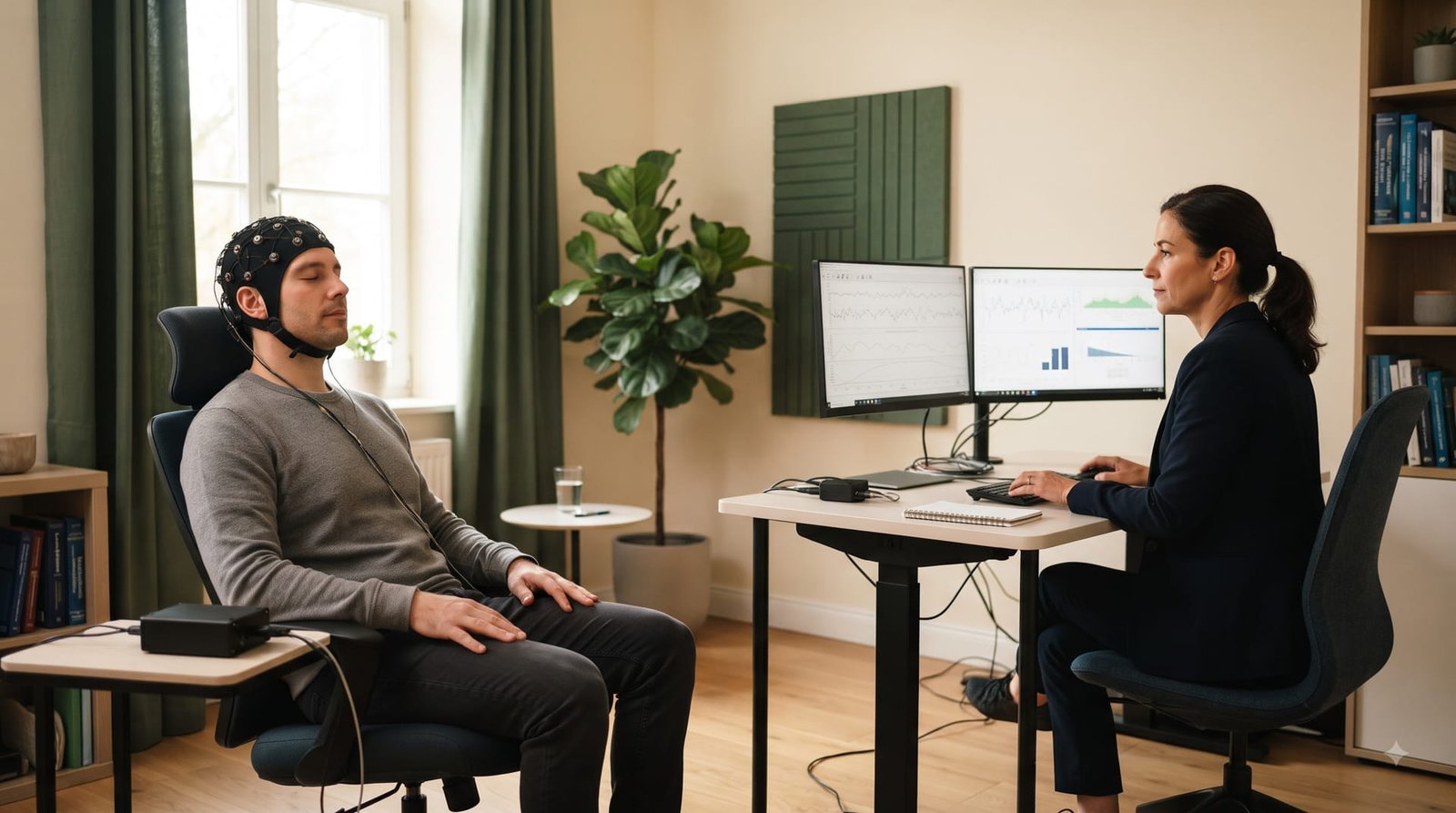
You may have heard the word neurofeedback but wondered what it actually means. At its simplest, neurofeedback is a form of biofeedback that uses information about brain activity to provide feedback to a person. One commonly used approach involves EEG, or electroencephalography, which records electrical activity from the scalp. This information is then presented in a way that provides feedback during a training session.
The important thing to understand is that neurofeedback isn’t simply “reading your brain” or giving the brain a command. It is a training process, and the details of how it is conducted depend on the approach, the individual, and the professional providing it.
This is also why responsible brain education matters. Neurofeedback includes different protocols and applications, and research into its effectiveness continues. Claims about what it can accomplish should be considered carefully and in context.
For professionals, learning about neurofeedback can open the door to understanding another tool used in certain clinical and educational settings. For the general public, the first step is simply understanding the technology and knowing what questions to ask.
What is being measured? What type of feedback is being provided? What is the intended purpose of the training? And who is providing it?
Good brain education doesn’t require us to believe every claim we encounter. It encourages us to ask better questions.